The Ultimate Setup Guide for Your Gamesir X5 Lite
The landscape of mobile gaming has shifted dramatically over the last few years. What used to be a platform defined by simple touch-screen puzzles has evolved into a powerhouse for triple-A titles, high-fidelity cloud streaming, and competitive battle royales. As mobile hardware continues to rival handheld consoles, the bottleneck for performance often comes down to the interface. Touch controls, while functional, lack the tactile precision and ergonomic comfort required for long gaming sessions. Enter the Gamesir X5 Lite, a specialized mobile controller designed to bridge the gap between traditional console ergonomics and the portability of a smartphone. This guide provides an exhaustive breakdown of how to optimize this hardware, ensuring that every button press and joystick movement translates into a competitive advantage.
Understanding the Gamesir X5 Lite Hardware
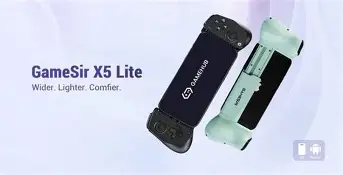
Before diving into the software configurations and button mapping, it is essential to understand the physical architecture of the Gamesir X5 Lite. Unlike "wraparound" controllers that simply clip onto the sides of a device, the X5 Lite utilizes a stable telescoping bridge that accommodates a wide range of smartphone sizes. This structural integrity is vital for maintaining a solid grip during intense gameplay, preventing the device from flexing or slipping.
The controller features a standard layout that will feel immediately familiar to users of modern console gamepads. It includes dual clickable analog sticks, a responsive D-pad, four face buttons, and a set of shoulder triggers and bumpers. One of the standout features of the X5 Lite is its focus on mechanical-feel buttons. Many mobile controllers rely on mushy membrane switches that lack feedback; however, the X5 Lite incorporates micro-switches that provide a satisfying click, reducing latency and increasing the tactile realization of each action.
Initial Physical Setup and Compatibility
Setting up the Gamesir X5 Lite begins with the physical connection. The device typically utilizes a direct USB-C connection rather than relying solely on Bluetooth. This is a critical distinction for enthusiasts. While Bluetooth has improved, it still introduces several milliseconds of input lag which can be the difference between victory and defeat in fast-paced titles like Call of Duty: Mobile or Genshin Impact. By plugging directly into the phone’s charging port, the X5 Lite ensures a near-zero latency connection.
To install your phone, gently pull the two sides of the controller apart to extend the bridge. Insert the USB-C connector side of your phone first, ensuring a snug fit into the controller’s plug. Once aligned, let the other side of the controller slide back to firmly clamp the phone in place. The rubberized padding on the interior of the grips is designed to hold the phone securely without scratching the chassis or interfering with screen protectors. It is worth noting that for phones with particularly bulky protective cases, you may need to remove the case to ensure the USB-C connector reaches the port fully.
Software Integration and the GameSir App
While the X5 Lite is largely plug-and-play for games with native controller support, the true power of the device is unlocked through the official GameSir software. This application acts as the nerve center for the controller, allowing for firmware updates, stick calibration, and custom button mapping. For gamers playing titles that do not naturally support external controllers, the app provides a "V-Touch" or "G-Touch" overlay mode. This mode allows you to map physical button presses to specific locations on the touch screen, effectively tricking the game into recognizing the controller.
Upon launching the app, the first step should always be checking for firmware updates. Manufacturers frequently release patches that improve stick deadzones, battery efficiency, and compatibility with new versions of Android or iOS. Calibration is the next priority. By following the on-screen prompts to rotate the sticks and press the triggers through their full range of motion, you ensure that the hardware is accurately communicating its position to the software, preventing "drift" or "incomplete" inputs.
Optimizing the Gaming Experience: Key Configurations
Once the hardware and software are communicating correctly, the focus shifts to in-game optimization. For competitive shooters, the "Trigger Travel" is a major consideration. The X5 Lite features triggers that can often be toggled between linear (analog) and hair-trigger (digital) modes through the software. Linear mode is ideal for racing games where you need granular control over acceleration and braking. Hair-trigger mode is essential for shooters, allowing for instantaneous firing with the slightest touch.
Discover deals on Electronics — updated daily.
See Deals →Another area of focus is the customization of the back buttons. The X5 Lite often includes programmable buttons on the rear of the grips. Assigning these to "Jump," "Crouch," or "Reload" allows you to keep your thumbs on the analog sticks at all times. This "pro-style" layout is a staple in the world of professional esports and provides a significant advantage in movement-based combat. It allows for advanced techniques like "slide-canceling" or "jump-shotting" that are nearly impossible to perform consistently with touch controls.
Pros and Cons of the Gamesir X5 Lite
- Pro: Ultra-Low Latency Connection - The direct USB-C interface eliminates the lag associated with Bluetooth, providing an instantaneous response time that is crucial for competitive play.
- Pro: Mechanical Micro-switches - The tactile feedback of the face buttons offers a console-quality experience and ensures that every input is registered with physical certainty.
- Pro: Ergonomic Versatility - The telescoping design fits a variety of phone sizes and distributions, making it a future-proof investment as you upgrade your smartphone.
- Pro: Advanced Software Customization - The ability to remap buttons and create touch-screen overlays allows the controller to work with almost any game in the app store.
- Con: Power Consumption - Since the controller draws power directly from the phone, it can lead to faster battery drain during extended sessions, though many models offer "pass-through" charging.
- Con: Case Compatibility - Users with thick, rugged cases may find it tedious to remove their phone’s protection every time they want to game.
Comparing the X5 Lite to Industry Standards
To understand where the X5 Lite sits in the market, it is helpful to compare its feature set against other popular mobile gaming solutions. While many budget controllers sacrifice build quality for price, the X5 Lite aims for a middle ground that provides premium features like hall-effect components or mechanical switches at a more accessible price point than flagship "Pro" models.
| Feature | Gamesir X5 Lite | Standard Bluetooth Gamepads | Premium Pro Mobile Controllers |
|---|---|---|---|
| Connection Type | USB-C Direct | Bluetooth Only | USB-C or Lightning |
| Input Latency | Near Zero | Variable (Low to Moderate) | Near Zero |
| Button Type | Mechanical/Tactile | Membrane | Mechanical or Optical |
| Software Support | Dedicated App / Mapping | Generic / Limited | Advanced Suite / Cloud Sync |
| Build Material | Reinforced Plastic | Lightweight Plastic | Premium Composite/Rubberized |
Buying Guide: Is the X5 Lite Right for You?
When considering the purchase of a mobile controller, the primary factor should be your library of games. If you primarily play titles like Diablo Immortal, Minecraft, or Roblox, which have native controller support, the X5 Lite is an easy recommendation. It will work out of the box with zero configuration required. However, if your favorite games are strictly touch-input only (like certain MOBAs), you must be willing to spend time in the GameSir app configuring the screen overlays.
Buyers should also consider their device's charging port location. The X5 Lite is designed for centered USB-C ports. While this covers 99% of modern Android phones, some niche folding phones or older devices may have off-center ports that could lead to a lopsided fit. Furthermore, consider your environment. The mechanical clicks of the X5 Lite are audible; if you plan on gaming in a quiet library or a bedroom shared with a light sleeper, the tactile noise is something to keep in mind compared to silent membrane controllers.
Ergonomics play a massive role for those with larger hands. The X5 Lite is designed to be compact to maintain portability, which means the layout is slightly tighter than a full-sized Xbox or PlayStation controller. For most, this is a fair trade-off for a device that fits in a jacket pocket, but users who prefer the large "wings" of a traditional console pad may need a brief adjustment period.
Advanced Use Cases: Cloud Gaming and Emulation
Beyond native mobile games, the X5 Lite is an exceptional tool for two specific niches: cloud gaming and retro emulation. Services like Xbox Game Pass (xCloud), NVIDIA GeForce NOW, and Amazon Luna have brought the entire library of PC and console gaming to the smartphone. Playing a game like Halo Infinite or Cyberpunk 2077 on a 6-inch screen requires a controller that doesn't hide half the screen under your thumbs. The X5 Lite excels here, providing the necessary triggers and thumbsticks to navigate complex 3D environments that were never designed for touch interactions.
For the emulation community, the X5 Lite is a dream. Retro consoles from the 16-bit era through the early 2000s relied heavily on precise D-pad movements and specific button combinations. The X5 Lite’s D-pad is curated to avoid "false diagonals," a common frustration in cheaper controllers where pressing "Right" accidentally registers as "Up-Right." This precision makes it a favorite for platformers and fighting games. Additionally, the ability to map the home and menu buttons within emulators allows for quick access to save states and fast-forward features, streamlining the retro experience.
Looking for the best Electronics deals on Amazon?
See Deals →Maintenance and Long-Term Care
To ensure the longevity of your Gamesir X5 Lite, a small amount of preventative maintenance goes a long way. The telescoping bridge contains a spring mechanism that can accumulate dust or lint over time. Periodically wiping down the inner rails with a dry microfiber cloth will keep the sliding action smooth. Similarly, the USB-C connector is a "male" end that is exposed when a phone is not docked. Using a small protective cap or simply storing the controller in a dedicated hardshell case will prevent the pins from becoming bent or obstructed by debris.
If you notice any stick drift after months of heavy use, don't panic. Before assuming it is a hardware failure, use the GameSir app to increase the "deadzone" by a small percentage (usually 3-5%). This tells the software to ignore very slight movements from the center, effectively neutralizing minor mechanical wear. Keeping the firmware updated is also a form of maintenance, as manufacturers often optimize the power draw to prevent the controller from "timing out" or losing connection during firmware-level OS updates on the phone.
The Evolution of the Mobile Ecosystem
The existence of devices like the X5 Lite highlights a broader trend: the "consolization" of the mobile phone. We are reaching a point where the smartphone is no longer just a communication device that happens to have games; for many, it is their primary gaming console. This shift necessitates hardware that matches that ambition. The X5 Lite doesn't just make games easier to play; it changes the kind of games you can play. It opens the door to high-stakes competitive play and long-form RPGs that would be exhausting to play with touch controls. By removing the friction between the player’s intent and the game’s execution, the controller becomes invisible, allowing for total immersion in the digital world.
The ultimate setup isn't just about the hardware itself; it's about how that hardware integrates into your life. Whether you are a student catching a quick match between classes, a commuter on a long train ride, or a dedicated gamer using a phone as a secondary "portable console" around the house, the X5 Lite provides a professional-grade interface that scales with your needs. When configured correctly—with the right firmware, calibrated sticks, and personalized button mapping—it transforms a standard smartphone into a legitimate gaming powerhouse.
Conclusion
The Gamesir X5 Lite stands as a testament to how far mobile peripherals have come. It addresses the primary pain points of mobile gaming—latency, ergonomics, and control precision—with a thoughtful, engineering-forward design. By following the steps outlined in this guide, from the initial physical connection to the advanced software mapping, you ensure that you are getting the maximum value out of your investment. While the mobile market is flooded with generic accessories, the X5 Lite distinguishes itself through its mechanical switches, low-latency connection, and robust software support. It is a tool designed for those who take their mobile gaming seriously and want their hardware to be an extension of their skill rather than a limitation. With the right setup, the X5 Lite provides a console-quality experience that fits in the palm of your hand, ready for whenever the next adventure begins.